
Sevenoaks Boiler Care: Choosing Installation, Repair and Servicing Support for Scale-Prone Systems
A boiler can work quietly in the background for years, but changes in hot water performance, unusual noises or recurring faults can quickly bring the heating system to the homeowner’s attention. In areas where hard water is a concern, limescale may be one factor worth considering when investigating these changes.

Why you can trust our content
We understand that the boiler industry can be confusing, with plenty of outdated or misleading information. That’s why we rely only on trusted, proven sources to guide our advice and installations:






At a glance
That does not mean every boiler problem is caused by scale. A heating system contains numerous components, and issues with pressure, controls, pumps, valves, sensors and circulation can produce similar symptoms.
For homeowners in Sevenoaks, the more useful approach is to understand how water quality fits into the wider picture. Knowing when to arrange servicing, when a repair may be appropriate and when installation advice is worth seeking can help avoid unnecessary disruption.
Why does limescale matter when caring for a boiler?
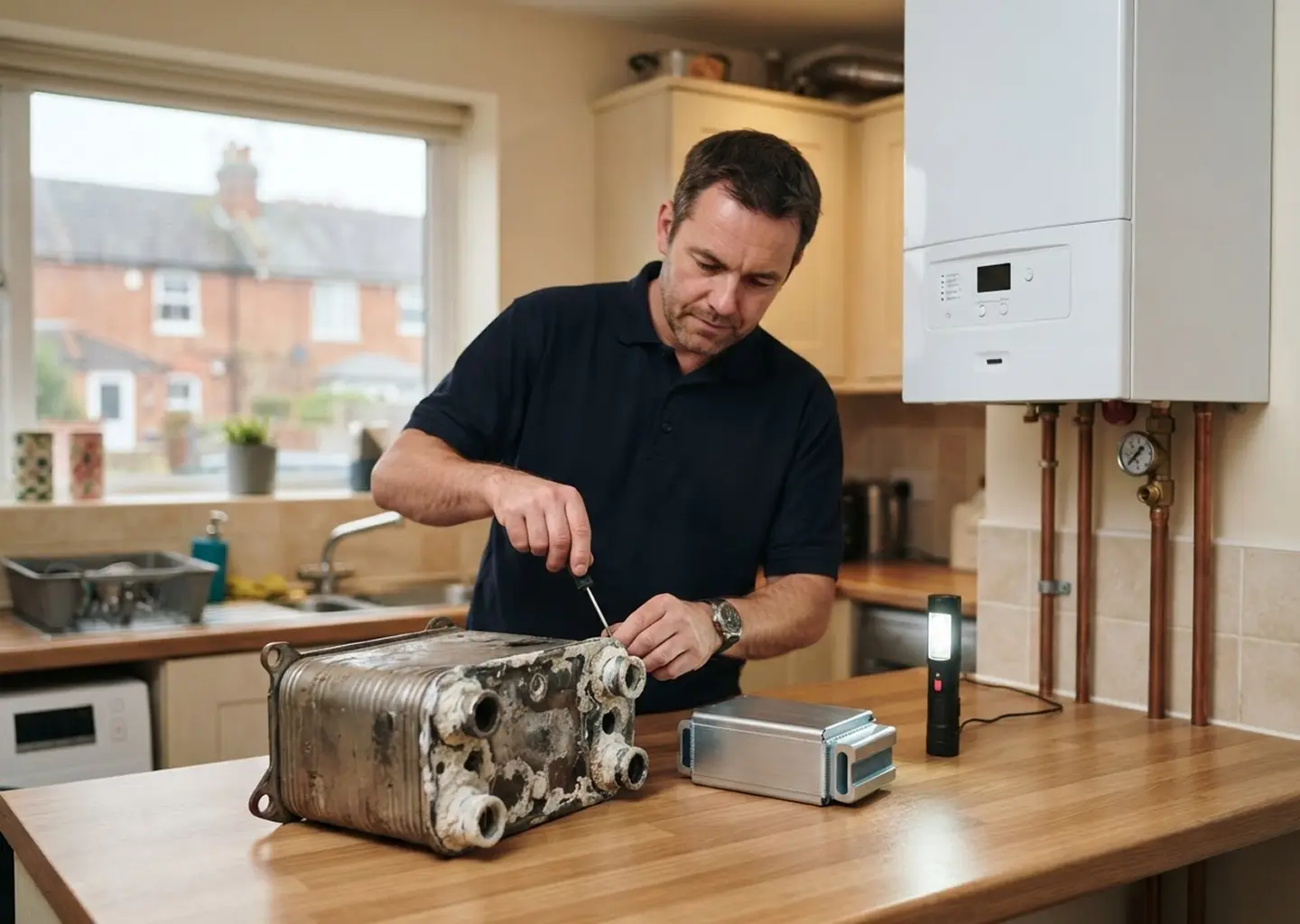
Limescale is created when minerals in hard water are deposited as water is heated or evaporates. The deposits are familiar around kettles, taps and shower fittings, but they can also develop within components that handle domestic hot water.
The effect depends on the appliance, water conditions and extent of any deposits. In some circumstances, scale can interfere with heat transfer or contribute to restrictions in water flow.
However, visible limescale around a tap does not prove that a boiler has an internal scale problem. Proper diagnosis is essential.
A practical boiler care plan should therefore consider:
- The age and condition of the appliance
- Its maintenance history
- Changes in heating or hot water performance
- Previous breakdowns
- Water pressure and supply
- The condition of the wider heating system
- Whether water treatment or scale management is appropriate
If your boiler is showing changes in performance and you suspect limescale may be involved, Kentish Plumbers can assess the system and explain the next steps.
What signs suggest a boiler needs professional attention?
Boiler problems do not always begin with a complete breakdown. Small changes can develop gradually, particularly with hot water performance.
Homeowners may notice:
- Hot water taking longer to reach the desired temperature
- Fluctuating temperatures at taps or showers
- Unusual rumbling or kettling sounds
- Repeated fault codes
- Reduced hot water flow
- Pressure dropping more frequently than expected
- The boiler switching off unexpectedly
- Increasing reliance on resets
None of these signs should automatically be attributed to limescale. They are reasons to investigate the appliance and determine what is actually happening.
Early assessment can also provide more options. A minor component fault may be straightforward to address, whereas leaving an unresolved issue can sometimes lead to further disruption.
When should you arrange boiler servicing?
Routine maintenance is an important part of looking after a heating system, whether or not the property has hard water.
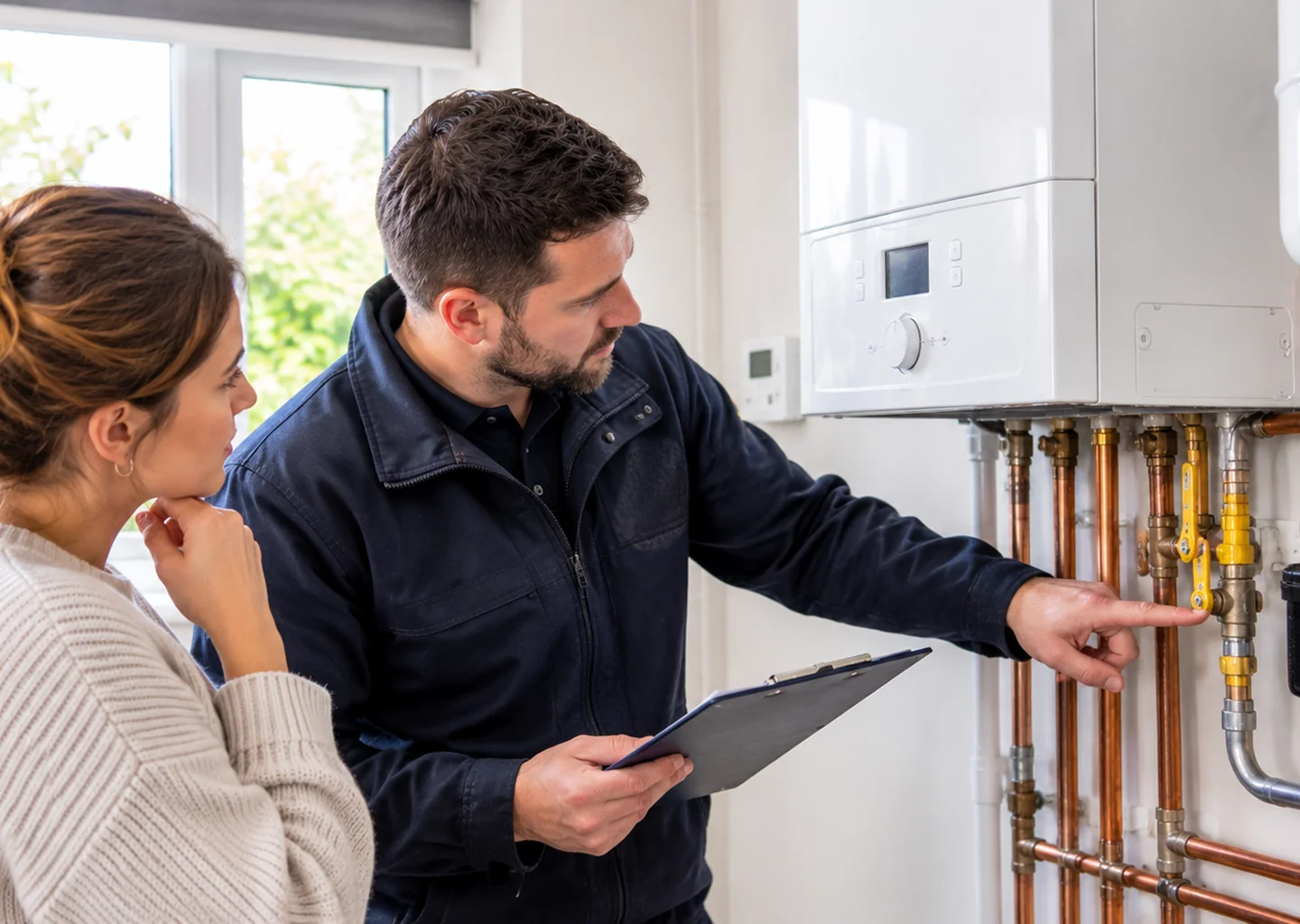
Boiler servicing Sevenoaks homeowners arrange should follow the manufacturer’s recommendations and any relevant requirements for the appliance. A service provides an opportunity to check safe operation and identify signs that may require further attention.
It is particularly sensible to seek advice if the boiler’s behaviour has changed since its previous service.
A service should not be confused with a repair. If a known fault is present, further diagnostic or repair work may be necessary.
How can servicing help identify developing scale-related problems?
Limescale may not always be immediately visible inside a boiler, but changes in performance can provide clues that warrant further investigation.
For example, inconsistent hot water or unusual operating noises could lead an engineer to inspect relevant components. The actual cause may turn out to be scale, but it could equally be a faulty valve, sensor, pump or another issue.
This is why regular servicing is valuable even when the boiler appears to be functioning normally. It creates opportunities to identify changes before they become major sources of disruption.
Good maintenance also involves the wider system. Radiators, controls, pipework and system water can all influence how effectively the heating operates.
What should you look for when choosing boiler installation support?
A new boiler should be selected for the property rather than simply chosen from a list of popular models.
During a professional assessment, factors such as heating demand, hot water requirements, water pressure, existing pipework and the proposed boiler location should be considered.
Where hard water is relevant, the installer can also discuss whether scale management needs to be considered.
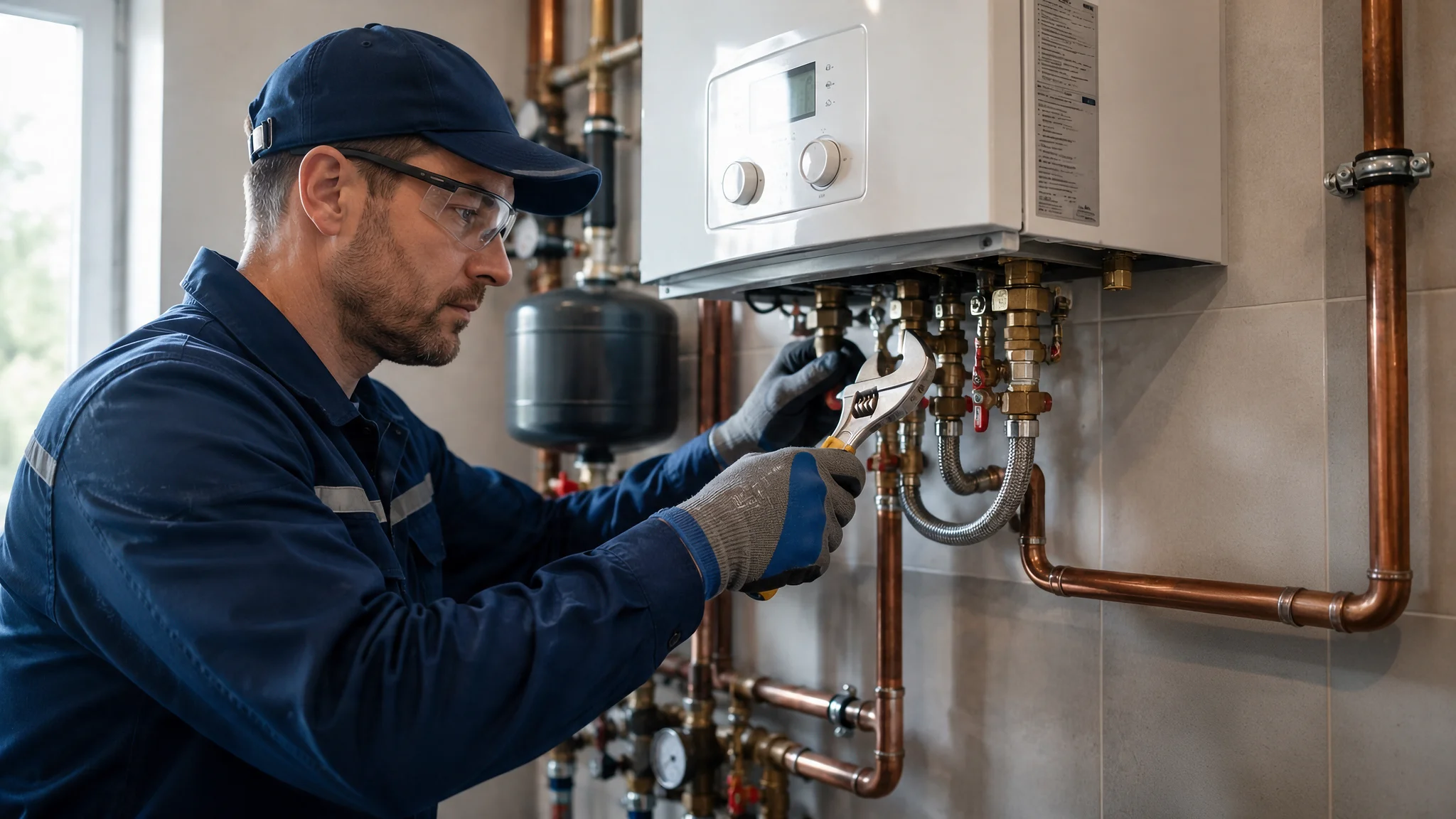
For homeowners arranging boiler installation Sevenoaks, useful questions include:
|
Question |
Why it matters |
|
Is the boiler correctly sized? |
Oversizing or undersizing can affect operation and efficiency |
|
Is the water pressure suitable? |
It can affect hot water performance |
|
What is the condition of existing pipework? |
Alterations may be needed for the new appliance |
|
Is hard water a relevant consideration? |
It may influence discussions about scale management |
|
Are the controls suitable? |
Appropriate controls support effective system operation |
|
Does the flue arrangement meet requirements? |
Correct installation is essential for safe operation |
|
Is the condensate route suitable? |
The new boiler needs appropriate drainage |
|
Does the existing system need other work? |
Addressing wider issues can support reliable operation |
A good installer should explain the reasoning behind the proposed system rather than focusing solely on the boiler itself.
If you are considering replacing an existing appliance, speak to Kentish Plumbers before choosing a boiler. A property-specific assessment can help identify the installation requirements and any water-related considerations.
Does hard water mean you should choose a particular boiler?
Not necessarily. Boiler selection involves several technical and household factors, and water hardness is only one consideration.
The type of hot water system, expected demand, available water pressure, property layout and manufacturer’s requirements all need to be taken into account.
Where hard water is a concern, the installer can assess whether any appropriate scale-management measure should form part of the installation.
It is better to make this decision as part of the system design than to assume that a particular boiler will solve every water-quality issue.
Can an existing boiler be repaired if limescale is suspected?
Yes, depending on the fault and the overall condition of the appliance.
If diagnosis confirms that a component has been affected and the boiler remains in reasonable condition, replacing or repairing that component may restore normal operation.
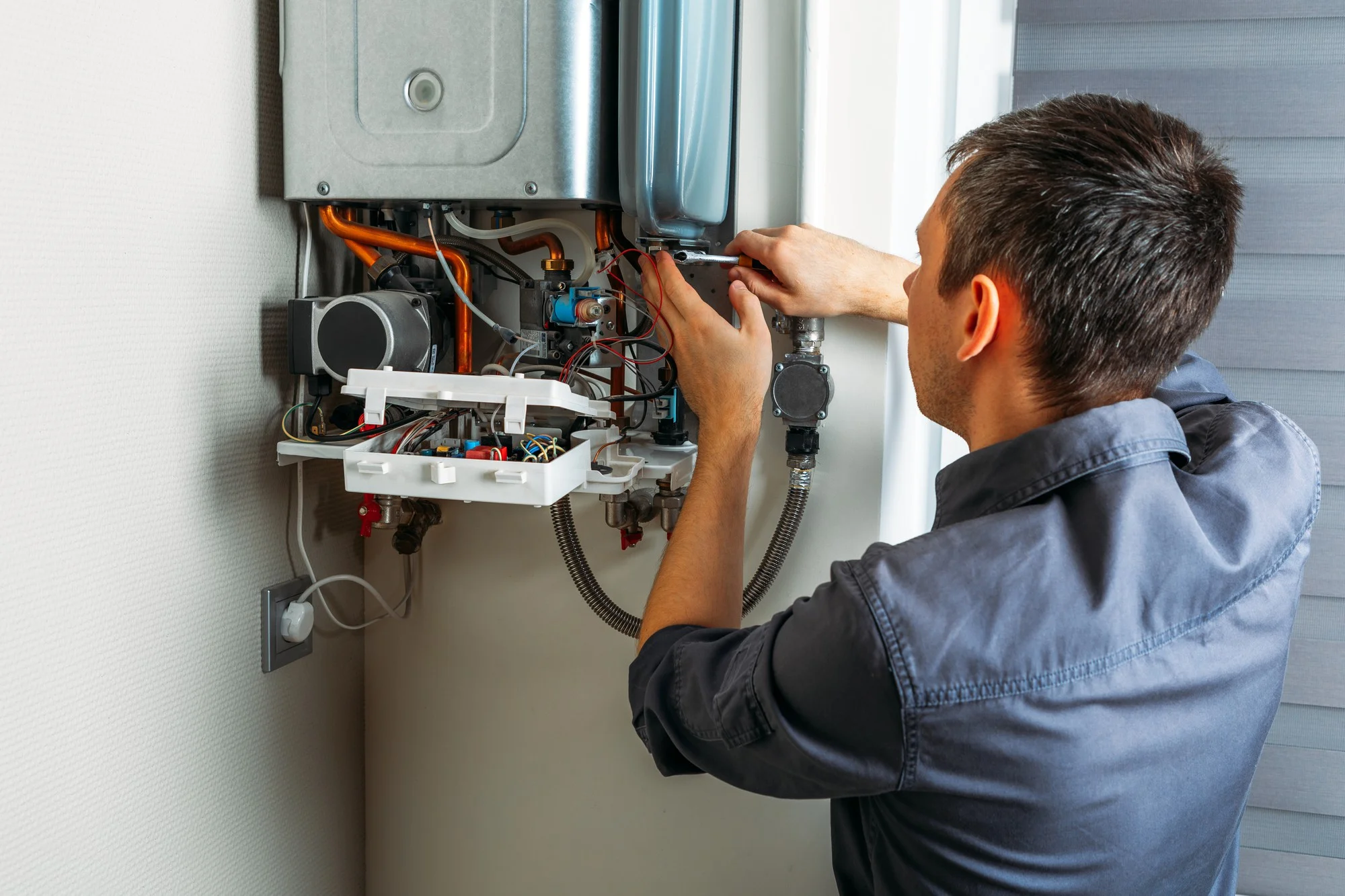
A boiler repair Sevenoaks service should therefore begin by establishing the actual cause. Assuming limescale is responsible without testing can lead to the wrong component being replaced.
The boiler’s age and previous repair history are also relevant. A repair can be sensible on a relatively modern, well-maintained appliance, while an older boiler with several unrelated faults may warrant a wider replacement discussion.
How should repair and replacement be compared?
The cheapest immediate option is not always the most suitable long-term choice, but replacement is not automatically the answer either.
A sensible comparison considers:
- The confirmed fault
- Repair requirements
- Boiler age
- Previous breakdown history
- Condition of other components
- Availability of suitable parts
- Expected future reliability
- Installation requirements for a replacement
- Changes in household heating and hot water demand
This creates a more balanced picture than comparing a repair price with the purchase price of a boiler alone.
If the existing appliance is otherwise sound, a repair may restore useful service. If repeated faults are becoming costly and disruptive, replacement advice may deserve consideration.
Are scale-management systems always necessary?
No. Hard water does not automatically mean that every household needs additional equipment.
The suitability of any scale-management approach depends on the property’s water conditions, plumbing arrangement, appliance and relevant manufacturer’s guidance.
An installer can explain whether such measures are appropriate and how they would fit into the system.
Homeowners should also consider ongoing maintenance. Any additional equipment needs to be looked after correctly if it is to perform as intended.
What can homeowners do between professional visits?
Simple observations can help identify changes early.
Pay attention to whether hot water takes longer to arrive, whether its temperature fluctuates or whether the boiler has started making noises that were not previously present.
It can also be useful to keep a record of recurring fault codes or repairs. This gives an engineer a clearer history when diagnosing a problem.
Routine cleaning of accessible taps and shower fittings can help manage visible limescale, but homeowners should not dismantle boiler components or attempt internal repairs themselves.
If a boiler develops a fault, use a suitably qualified professional for the appropriate work.
A typical Sevenoaks example
Consider a household with an established combi boiler that has been serviced regularly. The heating remains effective, but the family notices that the shower temperature has become less consistent and the boiler sometimes makes a low rumbling noise when producing hot water.
Rather than assuming the boiler needs replacing, the homeowner arranges an assessment. The engineer investigates the appliance and finds that a component is affected by deposits, while the wider boiler remains in reasonable condition.
The appropriate response is based on that diagnosis. Repair can be considered, while the homeowner can also discuss whether any suitable scale-management measure should be included in future maintenance planning.
This example illustrates why a symptom should be investigated before a replacement decision is made.
How can you choose the right level of boiler support?
Different situations call for different types of professional help.
For routine maintenance: arrange servicing in line with the manufacturer’s recommendations.
For a known fault: arrange a diagnostic assessment and repair where appropriate.
For an ageing or unreliable appliance: discuss whether continued repair remains practical.
For a planned replacement: arrange a full installation assessment before choosing the new boiler.
For persistent hard-water concerns: ask whether water quality and scale management should be considered as part of the wider system.
This approach helps match the service to the actual problem instead of treating every boiler issue in the same way.
What should a professional boiler service include?
The exact process depends on the appliance and manufacturer’s requirements, but servicing should focus on safe and correct operation.
A professional can identify signs that warrant further investigation and advise if additional work is required.
Boiler servicing Sevenoaks should not be viewed simply as a box-ticking exercise. It forms part of responsible heating maintenance and can help homeowners stay aware of the condition of their appliance.
If there is a suspected scale problem, the engineer can explain whether further diagnostic work is appropriate rather than assuming that routine servicing alone will resolve it.
Good boiler care starts with the right diagnosis
Limescale can be relevant to boiler maintenance, but it is only one part of the picture. A reliable approach considers water quality alongside the age, condition, usage and maintenance history of the heating system.
For homeowners considering boiler installation Sevenoaks, a proper survey can establish the requirements of the property and whether scale management needs to be discussed. For an existing appliance, timely servicing and professional diagnosis can help determine whether repair is appropriate.
Kentish Plumbers provides practical support across installation, repair and maintenance, helping homeowners understand what their heating system needs rather than making assumptions based on one symptom.
If you need advice about an existing boiler or are planning a new installation, contact Kentish Plumbers to discuss your requirements and arrange the appropriate service.
Related articles


At a glance
That does not mean every boiler problem is caused by scale. A heating system contains numerous components, and issues with pressure, controls, pumps, valves, sensors and circulation can produce similar symptoms.
For homeowners in Sevenoaks, the more useful approach is to understand how water quality fits into the wider picture. Knowing when to arrange servicing, when a repair may be appropriate and when installation advice is worth seeking can help avoid unnecessary disruption.
Why does limescale matter when caring for a boiler?
Limescale is created when minerals in hard water are deposited as water is heated or evaporates. The deposits are familiar around kettles, taps and shower fittings, but they can also develop within components that handle domestic hot water.
The effect depends on the appliance, water conditions and extent of any deposits. In some circumstances, scale can interfere with heat transfer or contribute to restrictions in water flow.
However, visible limescale around a tap does not prove that a boiler has an internal scale problem. Proper diagnosis is essential.
A practical boiler care plan should therefore consider:
- The age and condition of the appliance
- Its maintenance history
- Changes in heating or hot water performance
- Previous breakdowns
- Water pressure and supply
- The condition of the wider heating system
- Whether water treatment or scale management is appropriate
If your boiler is showing changes in performance and you suspect limescale may be involved, Kentish Plumbers can assess the system and explain the next steps.
What signs suggest a boiler needs professional attention?
Boiler problems do not always begin with a complete breakdown. Small changes can develop gradually, particularly with hot water performance.
Homeowners may notice:
- Hot water taking longer to reach the desired temperature
- Fluctuating temperatures at taps or showers
- Unusual rumbling or kettling sounds
- Repeated fault codes
- Reduced hot water flow
- Pressure dropping more frequently than expected
- The boiler switching off unexpectedly
- Increasing reliance on resets
None of these signs should automatically be attributed to limescale. They are reasons to investigate the appliance and determine what is actually happening.
Early assessment can also provide more options. A minor component fault may be straightforward to address, whereas leaving an unresolved issue can sometimes lead to further disruption.
When should you arrange boiler servicing?
Routine maintenance is an important part of looking after a heating system, whether or not the property has hard water.
Boiler servicing Sevenoaks homeowners arrange should follow the manufacturer’s recommendations and any relevant requirements for the appliance. A service provides an opportunity to check safe operation and identify signs that may require further attention.
It is particularly sensible to seek advice if the boiler’s behaviour has changed since its previous service.
A service should not be confused with a repair. If a known fault is present, further diagnostic or repair work may be necessary.
How can servicing help identify developing scale-related problems?
Limescale may not always be immediately visible inside a boiler, but changes in performance can provide clues that warrant further investigation.
For example, inconsistent hot water or unusual operating noises could lead an engineer to inspect relevant components. The actual cause may turn out to be scale, but it could equally be a faulty valve, sensor, pump or another issue.
This is why regular servicing is valuable even when the boiler appears to be functioning normally. It creates opportunities to identify changes before they become major sources of disruption.
Good maintenance also involves the wider system. Radiators, controls, pipework and system water can all influence how effectively the heating operates.
What should you look for when choosing boiler installation support?
A new boiler should be selected for the property rather than simply chosen from a list of popular models.
During a professional assessment, factors such as heating demand, hot water requirements, water pressure, existing pipework and the proposed boiler location should be considered.
Where hard water is relevant, the installer can also discuss whether scale management needs to be considered.
For homeowners arranging boiler installation Sevenoaks, useful questions include:
|
Question |
Why it matters |
|
Is the boiler correctly sized? |
Oversizing or undersizing can affect operation and efficiency |
|
Is the water pressure suitable? |
It can affect hot water performance |
|
What is the condition of existing pipework? |
Alterations may be needed for the new appliance |
|
Is hard water a relevant consideration? |
It may influence discussions about scale management |
|
Are the controls suitable? |
Appropriate controls support effective system operation |
|
Does the flue arrangement meet requirements? |
Correct installation is essential for safe operation |
|
Is the condensate route suitable? |
The new boiler needs appropriate drainage |
|
Does the existing system need other work? |
Addressing wider issues can support reliable operation |
A good installer should explain the reasoning behind the proposed system rather than focusing solely on the boiler itself.
If you are considering replacing an existing appliance, speak to Kentish Plumbers before choosing a boiler. A property-specific assessment can help identify the installation requirements and any water-related considerations.
Does hard water mean you should choose a particular boiler?
Not necessarily. Boiler selection involves several technical and household factors, and water hardness is only one consideration.
The type of hot water system, expected demand, available water pressure, property layout and manufacturer’s requirements all need to be taken into account.
Where hard water is a concern, the installer can assess whether any appropriate scale-management measure should form part of the installation.
It is better to make this decision as part of the system design than to assume that a particular boiler will solve every water-quality issue.
Can an existing boiler be repaired if limescale is suspected?
Yes, depending on the fault and the overall condition of the appliance.
If diagnosis confirms that a component has been affected and the boiler remains in reasonable condition, replacing or repairing that component may restore normal operation.
A boiler repair Sevenoaks service should therefore begin by establishing the actual cause. Assuming limescale is responsible without testing can lead to the wrong component being replaced.
The boiler’s age and previous repair history are also relevant. A repair can be sensible on a relatively modern, well-maintained appliance, while an older boiler with several unrelated faults may warrant a wider replacement discussion.
How should repair and replacement be compared?
The cheapest immediate option is not always the most suitable long-term choice, but replacement is not automatically the answer either.
A sensible comparison considers:
- The confirmed fault
- Repair requirements
- Boiler age
- Previous breakdown history
- Condition of other components
- Availability of suitable parts
- Expected future reliability
- Installation requirements for a replacement
- Changes in household heating and hot water demand
This creates a more balanced picture than comparing a repair price with the purchase price of a boiler alone.
If the existing appliance is otherwise sound, a repair may restore useful service. If repeated faults are becoming costly and disruptive, replacement advice may deserve consideration.
Are scale-management systems always necessary?
No. Hard water does not automatically mean that every household needs additional equipment.
The suitability of any scale-management approach depends on the property’s water conditions, plumbing arrangement, appliance and relevant manufacturer’s guidance.
An installer can explain whether such measures are appropriate and how they would fit into the system.
Homeowners should also consider ongoing maintenance. Any additional equipment needs to be looked after correctly if it is to perform as intended.
What can homeowners do between professional visits?
Simple observations can help identify changes early.
Pay attention to whether hot water takes longer to arrive, whether its temperature fluctuates or whether the boiler has started making noises that were not previously present.
It can also be useful to keep a record of recurring fault codes or repairs. This gives an engineer a clearer history when diagnosing a problem.
Routine cleaning of accessible taps and shower fittings can help manage visible limescale, but homeowners should not dismantle boiler components or attempt internal repairs themselves.
If a boiler develops a fault, use a suitably qualified professional for the appropriate work.
A typical Sevenoaks example
Consider a household with an established combi boiler that has been serviced regularly. The heating remains effective, but the family notices that the shower temperature has become less consistent and the boiler sometimes makes a low rumbling noise when producing hot water.
Rather than assuming the boiler needs replacing, the homeowner arranges an assessment. The engineer investigates the appliance and finds that a component is affected by deposits, while the wider boiler remains in reasonable condition.
The appropriate response is based on that diagnosis. Repair can be considered, while the homeowner can also discuss whether any suitable scale-management measure should be included in future maintenance planning.
This example illustrates why a symptom should be investigated before a replacement decision is made.
How can you choose the right level of boiler support?
Different situations call for different types of professional help.
For routine maintenance: arrange servicing in line with the manufacturer’s recommendations.
For a known fault: arrange a diagnostic assessment and repair where appropriate.
For an ageing or unreliable appliance: discuss whether continued repair remains practical.
For a planned replacement: arrange a full installation assessment before choosing the new boiler.
For persistent hard-water concerns: ask whether water quality and scale management should be considered as part of the wider system.
This approach helps match the service to the actual problem instead of treating every boiler issue in the same way.
What should a professional boiler service include?
The exact process depends on the appliance and manufacturer’s requirements, but servicing should focus on safe and correct operation.
A professional can identify signs that warrant further investigation and advise if additional work is required.
Boiler servicing Sevenoaks should not be viewed simply as a box-ticking exercise. It forms part of responsible heating maintenance and can help homeowners stay aware of the condition of their appliance.
If there is a suspected scale problem, the engineer can explain whether further diagnostic work is appropriate rather than assuming that routine servicing alone will resolve it.
Good boiler care starts with the right diagnosis
Limescale can be relevant to boiler maintenance, but it is only one part of the picture. A reliable approach considers water quality alongside the age, condition, usage and maintenance history of the heating system.
For homeowners considering boiler installation Sevenoaks, a proper survey can establish the requirements of the property and whether scale management needs to be discussed. For an existing appliance, timely servicing and professional diagnosis can help determine whether repair is appropriate.
Kentish Plumbers provides practical support across installation, repair and maintenance, helping homeowners understand what their heating system needs rather than making assumptions based on one symptom.
If you need advice about an existing boiler or are planning a new installation, contact Kentish Plumbers to discuss your requirements and arrange the appropriate service.