
Bathroom Installation Tunbridge Wells: How to Plan for Limescale on Showers, Taps and Fittings
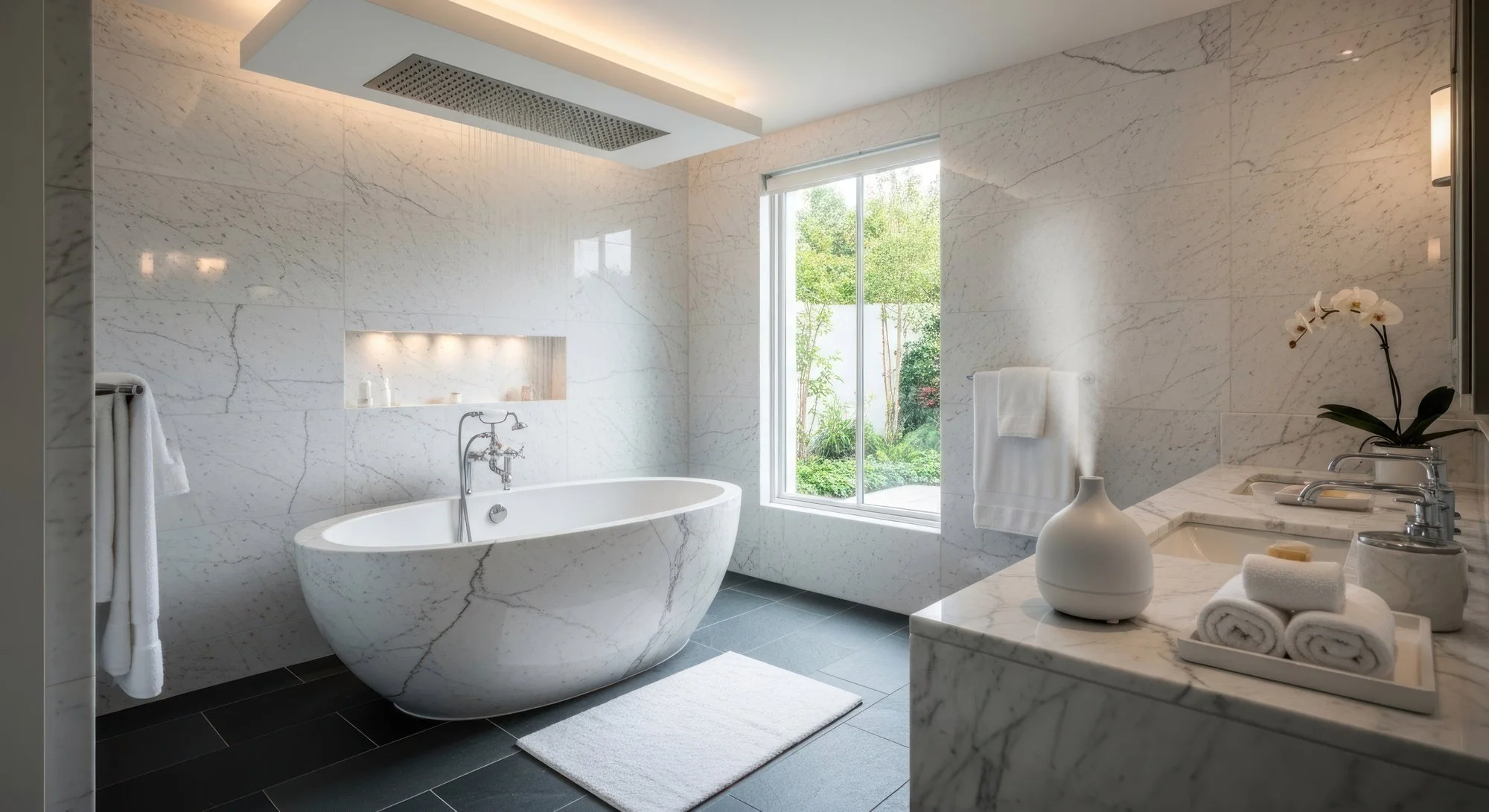
A new bathroom should be designed around more than appearance. The way the room is used, the available space, water pressure, ventilation and the practicality of cleaning all influence how well it performs over time.

Why you can trust our content
We understand that the boiler industry can be confusing, with plenty of outdated or misleading information. That’s why we rely only on trusted, proven sources to guide our advice and installations:






At a glance
Water hardness is another consideration worth thinking about before work begins. Limescale can gradually collect around showerheads, taps, valves and other areas where water is frequently heated or left to dry. While it does not mean a bathroom needs specialist equipment or unusual materials, it can affect how much maintenance certain choices require.
For homeowners planning a new bathroom, considering limescale before installation can help create a room that remains practical as well as attractive.
Why should limescale be considered before a bathroom installation?
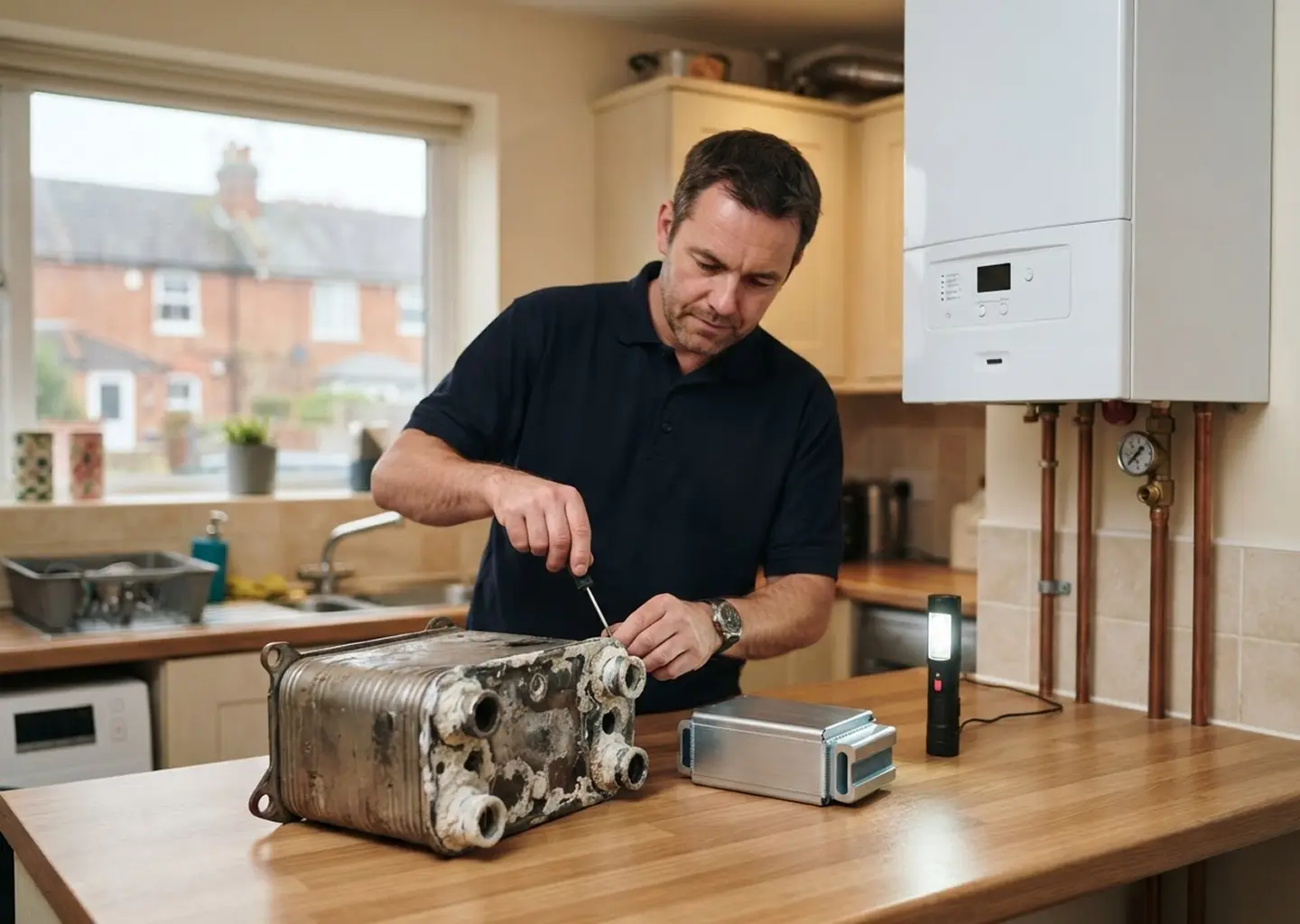
Limescale forms when minerals dissolved in hard water are left behind as water evaporates. It is particularly noticeable on shiny surfaces, shower fittings and taps because deposits can quickly become visible.
The issue is mainly one of maintenance and performance. Heavy deposits may make fittings harder to clean and, over time, can affect small openings such as those found in showerheads or spray nozzles.
Planning ahead gives homeowners the opportunity to consider:
- How easy individual fittings will be to clean
- Whether replacement parts are readily available
- The shape and finish of taps and shower fittings
- Access around the bath, shower and basin
- Ventilation and moisture control
- How the bathroom will be used each day
- Whether additional water treatment is appropriate
If you are planning a new bathroom and want to discuss practical choices for a hard-water environment, Kentish Plumbers can help you consider the installation requirements before work begins.
Which bathroom fittings are most affected by limescale?
Any fitting regularly exposed to water can develop deposits, but some areas tend to show them more quickly.
Showerheads are particularly noticeable because small spray outlets can collect mineral deposits. Taps can also develop a white or chalky build-up around aerators, spouts and joints.
Common areas to watch include:
|
Bathroom area |
Possible limescale issue |
Practical consideration |
|
Showerhead |
Blocked or uneven spray outlets |
Choose a design that is straightforward to clean |
|
Tap aerator |
Reduced or irregular water flow |
Ensure the aerator can be removed and maintained |
|
Tap spout |
Visible mineral deposits |
Consider accessible shapes and finishes |
|
Shower controls |
Deposits around joints and surfaces |
Allow enough space for cleaning |
|
Bath fittings |
Build-up around outlets |
Wipe exposed surfaces regularly |
|
Toilet inlet areas |
Mineral deposits may develop over time |
Maintain accessible components |
|
Glass shower screen |
White marks and spotting |
Regular cleaning helps limit visible build-up |
These problems are usually manageable. The objective is not to eliminate every trace of limescale, but to choose fittings and layouts that make routine maintenance easier.
Should you choose particular taps for a hard-water bathroom?
There is no single tap style that is guaranteed to remain free from limescale. However, the design can influence how easy it is to clean and maintain.
Simple shapes with accessible aerators and fewer awkward recesses may be easier to wipe down than highly intricate fittings. A tap with a finish that clearly shows water marks may also require more frequent cleaning, although appearance and maintenance requirements vary between products.
It is useful to consider how the fitting will actually be maintained rather than selecting it solely from a showroom display.
During bathroom installation Tunbridge Wells homeowners should also make sure the chosen fittings are compatible with the property’s water pressure and plumbing arrangement. A good-looking tap will not perform as expected if it is unsuitable for the system supplying it.
How can you reduce limescale build-up on a shower?
Regular maintenance is usually the first line of defence. Allowing water to sit and evaporate repeatedly on fittings gives mineral deposits more opportunity to become visible.
Simple habits can help:
- Wipe shower fittings after use where practical
- Clean showerhead outlets according to the manufacturer’s instructions
- Remove and clean accessible aerators when needed
- Deal with visible deposits before they become heavy
- Follow product instructions when using descaling products
- Avoid harsh cleaning methods that could damage finishes
The type of shower also matters. Some modern fittings are designed with features intended to make cleaning spray outlets easier, but homeowners should still follow the manufacturer’s maintenance guidance.
If water flow has changed significantly, cleaning alone may not solve the problem. There could be an issue with pressure, a valve, pipework or another component that needs investigation.
Does limescale affect the overall bathroom cost in Tunbridge Wells?
It can influence long-term maintenance considerations, but limescale is only one part of a bathroom project’s overall cost.
The bathroom cost Tunbridge Wells homeowners face will depend on the scope of the project and the products selected. A simple refresh involving replacement fittings can be very different from a complete renovation involving new plumbing, tiling, flooring, sanitaryware and electrical work.
When planning a budget, it is sensible to consider both the initial installation and future maintenance.
|
Project element |
What can affect the cost |
|
Sanitaryware |
Style, quality and specification |
|
Taps and shower |
Brand, design and technical requirements |
|
Plumbing |
Whether existing pipework can be retained |
|
Tiling |
Area covered, tile type and preparation |
|
Flooring |
Material and subfloor condition |
|
Shower enclosure |
Size, glass and configuration |
|
Electrical work |
Lighting, extraction and other requirements |
|
Labour |
Project complexity and installation time |
|
Water-related measures |
Whether any treatment or protection is appropriate |
A higher purchase price does not automatically mean a fitting will be easier to maintain. Likewise, choosing the cheapest option may not provide the best long-term value.
What should be checked before bathroom installation starts?
A successful bathroom project begins with understanding the existing room.
Before installation, the contractor should consider the condition and location of existing plumbing, drainage arrangements, water pressure and available electrical supplies where relevant.
The room’s ventilation also deserves attention. Effective extraction helps manage moisture, condensation and the general environment of the bathroom. This is separate from limescale, but it is an important part of designing a bathroom that remains comfortable and easier to maintain.
Measurements should also be checked carefully. A small change in the position of a shower, basin or toilet can affect access, storage and cleaning space.
Before committing to a bathroom project, contact Kentish Plumbers to discuss the room, existing plumbing and the type of installation you have in mind. Early planning can help identify practical issues before work starts.
Are some bathroom finishes easier to keep looking clean?
Finish is largely a matter of personal preference, but different surfaces can make water marks more or less noticeable.
Highly reflective surfaces tend to show deposits clearly. Brushed or textured finishes may disguise some marks, although they still need proper cleaning.
The most useful approach is to choose a finish that suits both the design and the amount of maintenance you are prepared to undertake. A bathroom that is used heavily every day will naturally need more regular cleaning than an occasional guest bathroom.
This is also where layout becomes important. If fittings are difficult to reach, routine cleaning can quickly become inconvenient. Leaving suitable access around taps, shower controls and other components can make a noticeable difference.
Should water treatment be included in a new bathroom project?
Not necessarily. The suitability of water treatment depends on the property’s water supply, the wider plumbing system and the homeowner’s objectives.
A bathroom installation is not automatically a reason to add a water treatment system. If hard water is already causing persistent problems throughout the property, however, it may be worth discussing the options with a suitably qualified professional.
Any treatment should be selected based on the actual circumstances rather than simply assuming that every household needs the same solution.
If a property already has water treatment equipment, the installer should also understand how it connects with the existing plumbing before designing the new bathroom.
How should shower screens and glass be planned for hard water?
Glass shower screens can develop visible water spotting when droplets are allowed to dry repeatedly. This does not usually mean the glass itself is defective.
The best defence is straightforward maintenance. Removing excess water after showering and cleaning the screen regularly can reduce the build-up that becomes more difficult to remove later.
The position of the screen can also influence cleaning. A design that leaves sufficient access around the glass and shower fittings is generally easier to maintain than one with awkward corners and restricted areas.
During bathroom installation Tunbridge Wells projects, the screen should therefore be considered alongside the overall layout rather than as an isolated decorative feature.
What mistakes should homeowners avoid when planning a limescale-prone bathroom?
One common mistake is choosing fittings based entirely on appearance. The most impressive showroom design may not necessarily be the easiest option to maintain.
Other issues include:
- Forgetting to check water pressure requirements
- Selecting fittings that are difficult to access
- Leaving insufficient space around the shower or basin
- Ignoring ventilation
- Assuming every water treatment product is suitable
- Choosing products without checking replacement parts
- Failing to consider cleaning requirements
- Treating visible limescale as a sign of a major plumbing fault
Good planning involves balancing appearance, performance, access and maintenance.
A typical Tunbridge Wells bathroom project
Consider a family bathroom being refurbished in a typical house. The existing shower works, but the showerhead has developed uneven spray patterns and the taps frequently show mineral deposits.
Rather than simply replacing everything with visually similar fittings, the homeowners discuss the practical requirements of the room. They choose accessible shower fittings, make sure the new taps are suitable for the available water pressure and retain enough space around the fixtures for straightforward cleaning.
The finished bathroom still has a modern appearance, but the design also takes everyday maintenance into account. The limescale has not disappeared, but dealing with it is less awkward because the fittings are easier to access and clean.
How can you make your new bathroom easier to maintain?
The best approach is to think about maintenance while designing the room rather than after installation is complete.
A few practical principles can make a difference:
- Prioritise accessibility. Make sure taps, shower fittings and removable components can be reached easily.
- Check compatibility. Confirm that taps and showers are suitable for the property’s water pressure and plumbing.
- Consider cleaning. Think about where water will collect and whether surfaces are straightforward to wipe.
- Plan ventilation. Effective extraction helps manage moisture and condensation.
- Follow manufacturer guidance. Use appropriate cleaning methods for each fitting and finish.
- Investigate persistent problems. Changes in flow or pressure may indicate something other than limescale.
These considerations can help prevent a beautiful new bathroom from becoming unnecessarily difficult to maintain.
Design for everyday use, not just installation day
Limescale is an everyday consideration for many homeowners, but it does not need to dictate the appearance or functionality of a new bathroom. The key is to think about maintenance, access, water pressure and fitting compatibility before the installation begins.
For homeowners planning bathrooms Tunbridge Wells projects, a well-considered layout can make regular cleaning and maintenance much easier. Choosing practical fittings and understanding the existing plumbing can also help avoid problems after the work is complete.
Kentish Plumbers can provide practical guidance on bathroom projects, helping homeowners consider the technical side of installation alongside the finished design. If you are planning a new bathroom and want advice tailored to your property, speak to our team.
For help planning your next bathroom project, contact Kentish Plumbers to discuss your requirements and request tailored installation advice.
Related articles


At a glance
Water hardness is another consideration worth thinking about before work begins. Limescale can gradually collect around showerheads, taps, valves and other areas where water is frequently heated or left to dry. While it does not mean a bathroom needs specialist equipment or unusual materials, it can affect how much maintenance certain choices require.
For homeowners planning a new bathroom, considering limescale before installation can help create a room that remains practical as well as attractive.
Why should limescale be considered before a bathroom installation?
Limescale forms when minerals dissolved in hard water are left behind as water evaporates. It is particularly noticeable on shiny surfaces, shower fittings and taps because deposits can quickly become visible.
The issue is mainly one of maintenance and performance. Heavy deposits may make fittings harder to clean and, over time, can affect small openings such as those found in showerheads or spray nozzles.
Planning ahead gives homeowners the opportunity to consider:
- How easy individual fittings will be to clean
- Whether replacement parts are readily available
- The shape and finish of taps and shower fittings
- Access around the bath, shower and basin
- Ventilation and moisture control
- How the bathroom will be used each day
- Whether additional water treatment is appropriate
If you are planning a new bathroom and want to discuss practical choices for a hard-water environment, Kentish Plumbers can help you consider the installation requirements before work begins.
Which bathroom fittings are most affected by limescale?
Any fitting regularly exposed to water can develop deposits, but some areas tend to show them more quickly.
Showerheads are particularly noticeable because small spray outlets can collect mineral deposits. Taps can also develop a white or chalky build-up around aerators, spouts and joints.
Common areas to watch include:
|
Bathroom area |
Possible limescale issue |
Practical consideration |
|
Showerhead |
Blocked or uneven spray outlets |
Choose a design that is straightforward to clean |
|
Tap aerator |
Reduced or irregular water flow |
Ensure the aerator can be removed and maintained |
|
Tap spout |
Visible mineral deposits |
Consider accessible shapes and finishes |
|
Shower controls |
Deposits around joints and surfaces |
Allow enough space for cleaning |
|
Bath fittings |
Build-up around outlets |
Wipe exposed surfaces regularly |
|
Toilet inlet areas |
Mineral deposits may develop over time |
Maintain accessible components |
|
Glass shower screen |
White marks and spotting |
Regular cleaning helps limit visible build-up |
These problems are usually manageable. The objective is not to eliminate every trace of limescale, but to choose fittings and layouts that make routine maintenance easier.
Should you choose particular taps for a hard-water bathroom?
There is no single tap style that is guaranteed to remain free from limescale. However, the design can influence how easy it is to clean and maintain.
Simple shapes with accessible aerators and fewer awkward recesses may be easier to wipe down than highly intricate fittings. A tap with a finish that clearly shows water marks may also require more frequent cleaning, although appearance and maintenance requirements vary between products.
It is useful to consider how the fitting will actually be maintained rather than selecting it solely from a showroom display.
During bathroom installation Tunbridge Wells homeowners should also make sure the chosen fittings are compatible with the property’s water pressure and plumbing arrangement. A good-looking tap will not perform as expected if it is unsuitable for the system supplying it.
How can you reduce limescale build-up on a shower?
Regular maintenance is usually the first line of defence. Allowing water to sit and evaporate repeatedly on fittings gives mineral deposits more opportunity to become visible.
Simple habits can help:
- Wipe shower fittings after use where practical
- Clean showerhead outlets according to the manufacturer’s instructions
- Remove and clean accessible aerators when needed
- Deal with visible deposits before they become heavy
- Follow product instructions when using descaling products
- Avoid harsh cleaning methods that could damage finishes
The type of shower also matters. Some modern fittings are designed with features intended to make cleaning spray outlets easier, but homeowners should still follow the manufacturer’s maintenance guidance.
If water flow has changed significantly, cleaning alone may not solve the problem. There could be an issue with pressure, a valve, pipework or another component that needs investigation.
Does limescale affect the overall bathroom cost in Tunbridge Wells?
It can influence long-term maintenance considerations, but limescale is only one part of a bathroom project’s overall cost.
The bathroom cost Tunbridge Wells homeowners face will depend on the scope of the project and the products selected. A simple refresh involving replacement fittings can be very different from a complete renovation involving new plumbing, tiling, flooring, sanitaryware and electrical work.
When planning a budget, it is sensible to consider both the initial installation and future maintenance.
|
Project element |
What can affect the cost |
|
Sanitaryware |
Style, quality and specification |
|
Taps and shower |
Brand, design and technical requirements |
|
Plumbing |
Whether existing pipework can be retained |
|
Tiling |
Area covered, tile type and preparation |
|
Flooring |
Material and subfloor condition |
|
Shower enclosure |
Size, glass and configuration |
|
Electrical work |
Lighting, extraction and other requirements |
|
Labour |
Project complexity and installation time |
|
Water-related measures |
Whether any treatment or protection is appropriate |
A higher purchase price does not automatically mean a fitting will be easier to maintain. Likewise, choosing the cheapest option may not provide the best long-term value.
What should be checked before bathroom installation starts?
A successful bathroom project begins with understanding the existing room.
Before installation, the contractor should consider the condition and location of existing plumbing, drainage arrangements, water pressure and available electrical supplies where relevant.
The room’s ventilation also deserves attention. Effective extraction helps manage moisture, condensation and the general environment of the bathroom. This is separate from limescale, but it is an important part of designing a bathroom that remains comfortable and easier to maintain.
Measurements should also be checked carefully. A small change in the position of a shower, basin or toilet can affect access, storage and cleaning space.
Before committing to a bathroom project, contact Kentish Plumbers to discuss the room, existing plumbing and the type of installation you have in mind. Early planning can help identify practical issues before work starts.
Are some bathroom finishes easier to keep looking clean?
Finish is largely a matter of personal preference, but different surfaces can make water marks more or less noticeable.
Highly reflective surfaces tend to show deposits clearly. Brushed or textured finishes may disguise some marks, although they still need proper cleaning.
The most useful approach is to choose a finish that suits both the design and the amount of maintenance you are prepared to undertake. A bathroom that is used heavily every day will naturally need more regular cleaning than an occasional guest bathroom.
This is also where layout becomes important. If fittings are difficult to reach, routine cleaning can quickly become inconvenient. Leaving suitable access around taps, shower controls and other components can make a noticeable difference.
Should water treatment be included in a new bathroom project?
Not necessarily. The suitability of water treatment depends on the property’s water supply, the wider plumbing system and the homeowner’s objectives.
A bathroom installation is not automatically a reason to add a water treatment system. If hard water is already causing persistent problems throughout the property, however, it may be worth discussing the options with a suitably qualified professional.
Any treatment should be selected based on the actual circumstances rather than simply assuming that every household needs the same solution.
If a property already has water treatment equipment, the installer should also understand how it connects with the existing plumbing before designing the new bathroom.
How should shower screens and glass be planned for hard water?
Glass shower screens can develop visible water spotting when droplets are allowed to dry repeatedly. This does not usually mean the glass itself is defective.
The best defence is straightforward maintenance. Removing excess water after showering and cleaning the screen regularly can reduce the build-up that becomes more difficult to remove later.
The position of the screen can also influence cleaning. A design that leaves sufficient access around the glass and shower fittings is generally easier to maintain than one with awkward corners and restricted areas.
During bathroom installation Tunbridge Wells projects, the screen should therefore be considered alongside the overall layout rather than as an isolated decorative feature.
What mistakes should homeowners avoid when planning a limescale-prone bathroom?
One common mistake is choosing fittings based entirely on appearance. The most impressive showroom design may not necessarily be the easiest option to maintain.
Other issues include:
- Forgetting to check water pressure requirements
- Selecting fittings that are difficult to access
- Leaving insufficient space around the shower or basin
- Ignoring ventilation
- Assuming every water treatment product is suitable
- Choosing products without checking replacement parts
- Failing to consider cleaning requirements
- Treating visible limescale as a sign of a major plumbing fault
Good planning involves balancing appearance, performance, access and maintenance.
A typical Tunbridge Wells bathroom project
Consider a family bathroom being refurbished in a typical house. The existing shower works, but the showerhead has developed uneven spray patterns and the taps frequently show mineral deposits.
Rather than simply replacing everything with visually similar fittings, the homeowners discuss the practical requirements of the room. They choose accessible shower fittings, make sure the new taps are suitable for the available water pressure and retain enough space around the fixtures for straightforward cleaning.
The finished bathroom still has a modern appearance, but the design also takes everyday maintenance into account. The limescale has not disappeared, but dealing with it is less awkward because the fittings are easier to access and clean.
How can you make your new bathroom easier to maintain?
The best approach is to think about maintenance while designing the room rather than after installation is complete.
A few practical principles can make a difference:
- Prioritise accessibility. Make sure taps, shower fittings and removable components can be reached easily.
- Check compatibility. Confirm that taps and showers are suitable for the property’s water pressure and plumbing.
- Consider cleaning. Think about where water will collect and whether surfaces are straightforward to wipe.
- Plan ventilation. Effective extraction helps manage moisture and condensation.
- Follow manufacturer guidance. Use appropriate cleaning methods for each fitting and finish.
- Investigate persistent problems. Changes in flow or pressure may indicate something other than limescale.
These considerations can help prevent a beautiful new bathroom from becoming unnecessarily difficult to maintain.
Design for everyday use, not just installation day
Limescale is an everyday consideration for many homeowners, but it does not need to dictate the appearance or functionality of a new bathroom. The key is to think about maintenance, access, water pressure and fitting compatibility before the installation begins.
For homeowners planning bathrooms Tunbridge Wells projects, a well-considered layout can make regular cleaning and maintenance much easier. Choosing practical fittings and understanding the existing plumbing can also help avoid problems after the work is complete.
Kentish Plumbers can provide practical guidance on bathroom projects, helping homeowners consider the technical side of installation alongside the finished design. If you are planning a new bathroom and want advice tailored to your property, speak to our team.
For help planning your next bathroom project, contact Kentish Plumbers to discuss your requirements and request tailored installation advice.